Wednesday, 16 November 2011

Delhi

And then before we knew it we were on a train heading back to New Delhi.  We were a bit apprehensive after our bemusing arrival six weeks earlier but having acclimatised to India we realised the it's the same as any other city.  It was great to arrive at the train station knowing where we were.  We found a sweet little hostel near the main bazaar and knew exactly where to go for a cold beer.  We had some drinks with a group of Irish guys with a guitar playing anything from 'molly malone' to an acoustic rap version of 'it's getting hot in here...'

As our last sight-seeing trip we went to Qutb Minar in south Delhi which has one of the oldest Mosques and some old tombs. 
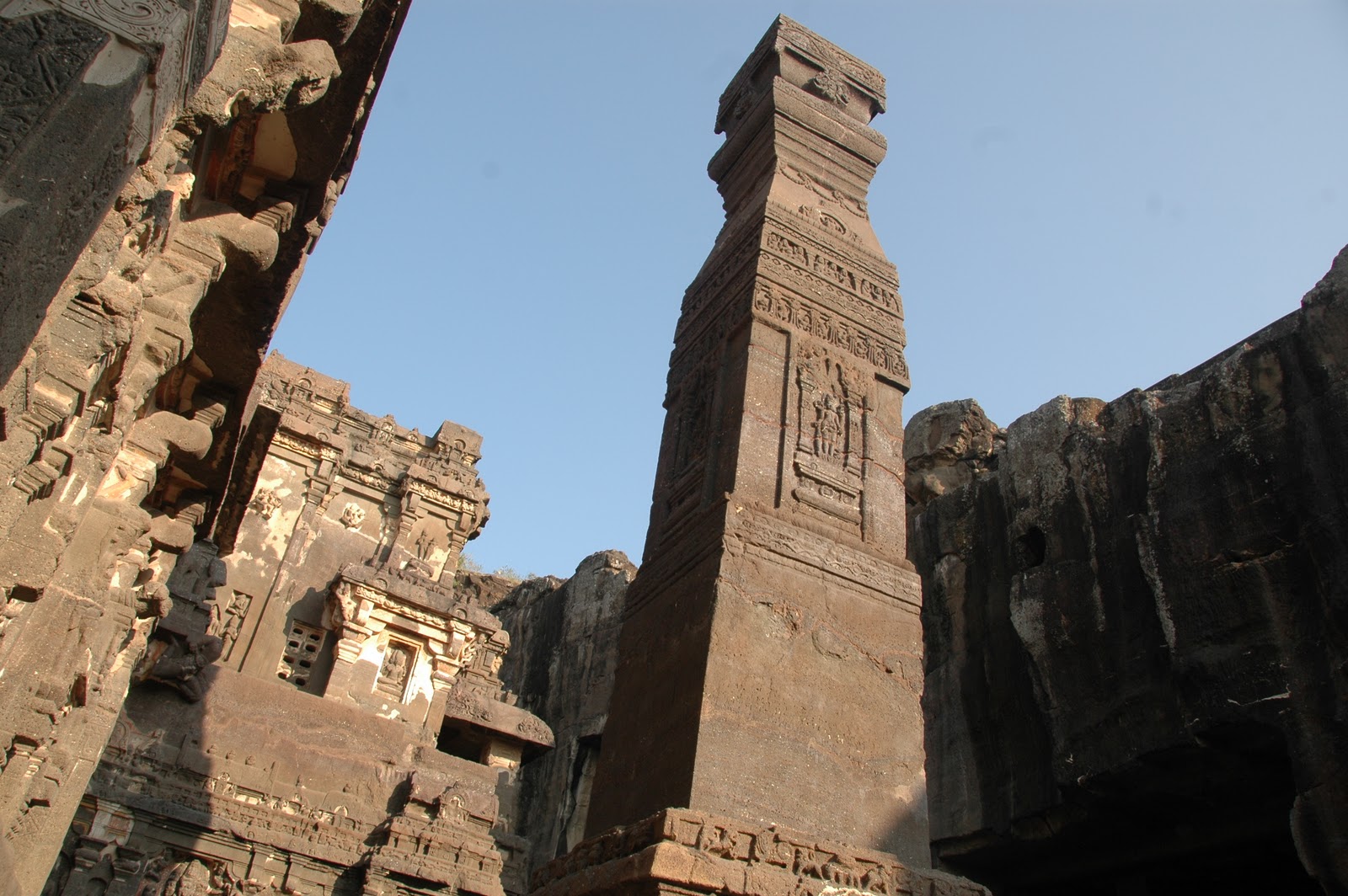
 It also has the Iron Pillar, a 7.5 meter black pillar that has baffled scientists by not rusting and by being made of wrought Iron about 1500 years before the process was used elsewhere.  This place was important to Dan having seen a photo of Jon in that spot some years before.  He hadn't remembered it's location though so after asking almost everyone we met, "have you been to the giant black pole?" it was lovely closure to our trip to be able to take this shot:
We fly to Thailand next, though because of the flooding we have decided to fly out to Penang, in Malaysia, after only one day.  It'll be strange to leave India - we feel like we're just getting the hang of it.  It has been such an intense experience I think we're going to need to digest things that have happened for some time, but we're both looking forward to coming back.  It is not an easy country to just step into but it's amazingly chaotic layers work somehow.  The sheer number of people and ways of interacting force you to look outside of individuality and stop taking things personally.  The ego learns that there is only a place for you because you happen to be the one taking up that space, so if you want to progress than you'd better stick out your elbows and make some noise.

(at the airport - bye bye India!)

Ajanta

Another of the big archeological site the Ajanta caves are not so far from Ellora, though we left a day in between in case we got a bit caved out.  These were discovered by chance in 1819 by British troops and are incredibly important both because of the preserved statues and carvings but also because the paintings decorating the interiors are some of the only surviving examples in the world.  These murals cover the caves, retaining still vibrant colours and images.  The paintings are beautiful: telling stories of Buddha's life and illustrating tales of gods and kings with intricate scenes.  Seeing the carvings as in Ellora, but with this extra layer of artistry was amazing.


 Out of the 28 caves there were a couple of examples that were unfinished.  To see a jagged hole with a vague pillar or two and then see the huge immaculate temples of finished work was interesting as it showed the progression and really reinforced the task and workmanship involved.


 For our visit to Ajanta we stayed in a little city called Jalgaon. 


Going for a wander that evening we found ourselves at the cultural opposite of our recent cave experience - a shopping complex with bowling (sort of) and pool tables.  Dan was a very happy bunny.


Ellora

Ellora is one of India's important archeological sites consisting of caves built by various religions between third century B.C. and eighth century A.D.  Getting to Ellora meant staying at Aurangabad (pronounced Orangobad, like the monkey). We stayed in a neat hotel and met some Irish guys who had been in India for 3 days. We took the Government bus to the caves lasting about 45 minutes. The Ellora caves were set out in a line, spanning 1 to 34.  The earliest caves being Buddhist, the middle caves being Hindi and the final 5 or 6 being Jain (Jainists are a progression/tangent from Hinduism).

To call them caves is a huge understatement as it invokes some image of natural holes in stone.  These caves were man-made temples carved into a giant cliff face.  Cutting and chipping into the stone the creators made smooth square rooms with pillars, antechambers, sleeping quarters and intricate carved decorations on the walls.  The Buddhist caves were the oldest and were quite plane in the main halls, though stunning for their size and concept.  In the back area of each was a separate chamber with a giant statue of Buddha.  Each cave would be pretty dark but somehow the natural light entering the caves would always catch Buddha's form and illuminate him.  Going closer to these smaller chambers and shining a torch showed the amazing sculpted forms around Buddha - giant protectors, worshipers, cherubs and animals.


(Even the local birds are architecturally adept)
The caves are quite indescribable.  Each one different and so full of the dedication and immense workload  it would have taken to build.  The most famous looks like a temple as you approach until you realise that the workers carved so much as to remove the cliff from around the cave.  Cut all from one patch of stone the feat of engineering and planning to be able deconstruct a cliff into a temple was overwhelming, particularly as every surface was decorated in carvings.  Unbelievable.


Mumbai

Mumbai is hot.   Really really hot.  And very humid.  It was also expensive (well compared the rest of India!) but we managed to find a little hostel with a sea view - if you stood right next to the wall, poked your head out a bit and squinted...  It was a funny place where the walls didnt reach the ceiling so it was more like a dorm with partitions.  The area we were staying in was touristy and a bit strange.  Having passed expensive greasy un-appetising diners we ended up eating at McDonalds... the McChicken Maharaja was a bit of a fail but McVeg with cheese hit the spot.
One night we went to the cinema - with no bollywood available we watched Tower Heist with Ben Stiller.  Wasn't a bad film, quite funny, but the whole experience was a lovely break into suspended reality.  To be in an air-con space doing something familiar and engrossing made us relax and we both realise how long it'd been since leaving England. 

We took a boat ride to the island of Elephanta.  Expecting a bit of a tropical island day trip we were quite surprised to find that most viewpoints from the hilltops involved more oil refineries and gas works than palmtrees.  Oh well not long till thailand for that....
 The boat returned to Mumbai at the Gateway to India so after five and a half weeks we had officialy entered the country!

Varanasi

We took an over-night train to Varanasi. After freshening up at the guest house, we went for a walk along the bank of the river Ganges. Varanasi is the most holy of cities for the Hindu faith and one of the oldest in the world!  As we were walking along the bank we first saw bathers in the river 'washing' themselves with the holy river water, even though it is brown with dirt and rubbish and 10 miles up stream there are toxic metals being poured into the river by factories.  So sad... We wondered if the ancient belief in this holy water still meant that it helped and healed rather than harmed its bathers.


 It was my idea to come all the way out East as I wanted to see the Ganges and the rituals performed along it, including the cremation sites.  We walked over and watched as as many as 10 - 15 bodies, barely covered in shrouds, being washed before being placed on a individual fire stacks.  The site was amazing, although very sad at the same time.  To watch a guy flipping a relative's charred body so that it caught fire again was something I've never seen before.  Once burnt the body parts were thrown into the river.
Saying that it was sad isn't so true.  In fact around the burial site no one is allowed to cry as this emotion could interrupt the soul leaving the body of the cremated.  We learnt that Hindu women are not allowed in the place as they are more likely to weep and tarnish the released soul.  It is also said that in past times the intense sadness of the women would let spirits enter that would make them throw themselves onto the flames with their late husbands.  Centuries before, this act called Sati was actually expected of the many wives of the maharajas.  We spent not long here as it was so intense.  To witness such a different form of funeral, a different form of mourning stemming from belief in reincarnation was shocking and made us both conscious of our difference and intrusion, as welcomed as we were by the people around.

We then went for a walk the other way down the river for a few km and waited for sunset and the daily prayer ritual. This was amazing.  Seven young men in robes stood in a line on stage whilst chanting and song carried around them.  They performed a synchronised ritual involving bells, gongs, shell flutes and incense.  It carried on for over an hour and the crowd drawn there was huge.  Every paving stone in the area was a seat and the whole river in front of the ceremony was packed with boats full of people watching and joining in the chanting.  At each of the ghats where stairs go into the river people would take bowls made of leaves containing flowers and a lit candle and push it out into the water.  Once past the boats the floating lights drifted down the Ganges carrying prayers and wishes with them.


Next day, with pack-lunch and lots of water we set off for the station to begin our mamouth train ride to Mumbai!  This train takes 26 hours as it basically crosses from east to west.  Because of the length we decided to treat ourselves to 2nd class sleeper - which has the luxury of air conditioning and they even give you bed sheets!  Many games of cards, Forrest Gump and little sleep later we arrived in Mumbai...

Saturday, 12 November 2011

Khajuaro


Having only one day in Khajuaro, we needed to spend our time wisely. We decided to go to the Western block of temples as it was the closest and the most in one group. These temples, all made from around 920 A.D, were lost for over 500 years and then renevated about 200 years ago.  They are devoted to a select few of the main Hindu gods and are famous for the graphic carved images from the Karma Sutra.  Each temple had amazing carved sculptures inside and out...some a bit more erotic than others!


Agra - Taj Mahal

A wise old man told me 'get into Agra, go and see the Taj Mahal, then get out of there' (Thanks Jon). Luckily thats exactly what we did.  Agra is really spaced out (in size) compared to most other cities we have been to. The rickshaw drive to the Taj was some distance. Entering from the South gate, relaxed knowing we had all day just to gaze, we strolled into the first courtyard where we caught our first glimpse of the Taj through the gate, already quite inspiring with the thought of seeing the whole thing. There were crowds of people, i think i got up to 23 then gave up counting, but my estimates were in the couple of thousands.

Going through the gates we were struck at the sheer beauty of the monument. The four towers that form a perfect square created perfect harmony with the central tomb. The gardens were well kept and made the whole panorama so symetric. The story goes; the Raj at the time lost his favourite wife, who died giving birth to their 14th child.  As she lay dying he promised to create an unforgettable monument for her.  A year later started to build the tomb for her, 22 years later it was complete and she was placed in the centre.  On his death he was laid next to her - the only non symetrical piece on the whole plot.  Inside the chambers' elaborate marbel carvings were inlayed with semi precious stones such as emeralds and rubies. A really perfect building.  It has such balance as a whole.  "A teardrop on the face of eternity." - Rabindranath Tagore.